 Listen · 35 min
The Slow Pitch Sales Podcast, Ep 115
Moving From Social Trust to the Sales Funnel
How to move from a trusted relationship to a useful sales conversation without forcing the transition.
With Rob Jager

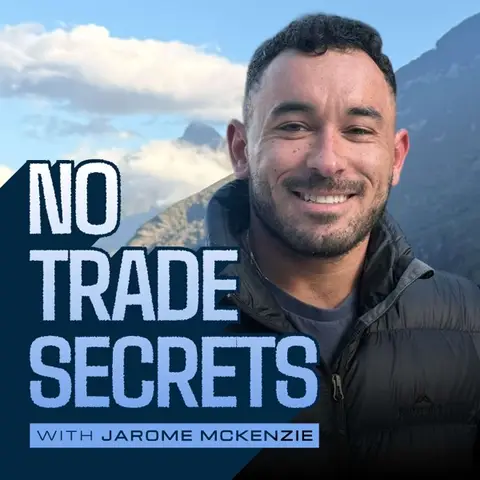
How to build a community people want to join without turning it into a sales pitch.
Paul Jones with Jarome McKenzie
The strongest rooms begin with a precise shared experience, problem or identity.
A simple catalyst question can help the right participants form useful connections without forced networking.
Shared activity and direct conversation support different ways people build trust.
Fast-moving companies benefit from bringing customers closer to product decisions instead of protecting every idea behind a moat.
Press a time to listen from there.
Paul compares a conversation among strangers to going down a river, because no one knows where it will go. The host agrees that talks without an agenda let everyone be themselves.
The host asks where Bridgio would start with his own team. Paul begins with the people: how well a client knows its buyers, whether it likes them and what keeps them up at night.
Paul uses noble gases as a model for who to invite: the right people bond with barely a push. In business communities he usually groups people by role, then adds questions they can unpack.
The host asks how much the setting matters and describes the connections he has made playing golf with strangers. Paul says golf brings together people who share values, then explains parallel play.
The host asks about Paul's power breathing project. Paul tells how a session brought back old fears, like falling out of a raft in the Amazon, and why he is now getting Wim Hof certified.
Paul adds a story to the breathing, such as rowing into battle as a Viking. Everyone in the room goes through the same story, feels it differently and then talks about it.
The host closes with the show's question about which trade secret should not be a secret anymore. Paul answers adaptability, says AI is disrupting the old moats, and explains what to open up instead.
Transcribed from the episode audio, with speaker names added. Sponsor messages are left out.
Host
Real stories, real lessons, real entrepreneurs who give it all away. Welcome to No Trade Secrets.
Paul Jones
The reason why I like social learning theory is it feels like you're just starting down the river. You don't know where this conversation is going to go. You don't know what rapids you might encounter. But crafting or facilitating or guiding people and helping them feel excited, anticipatory about a conversation with people that they don't know, I think that that can feel like going down a river, because you don't know, ultimately, where the conversation is going to take you. And that, what I try to do is make it so that that part of it feels fun, the fact that you don't know where this conversation is going to go.
Some people I've worked with are like, dude, wait, wait, wait, wait, we don't have everything scripted out? No. You can't tell me where this event is going to, what's going to happen at the end of this event? No, I cannot tell you. It's up to the participants.
And some people just cannot handle that. A lot of people love it. Some people can't handle that. But I think that's how you build relationships. And that's how you build connections.
I mean, look at Burning Man. Burning Man, everyone shows up and you just start to trade. Like, we don't know what the outcome is going to be. We're just trading for stuff, you know? And people love it. People go to it every year. It's huge.
Host
Yeah. No, and this, I mean, I feel like what you just, what you just said is, is very much, it makes me, what it makes me think of is something, you know, sometimes I have to remind myself, but it's something that is really core to how I try to approach life every day is of just, like, trusting the journey wherever it goes. And because it is fun. Like, if you knew where, if you knew exactly how your life was going to unfold, how boring would that be? Oh, man. Yeah.
But, you know, it's uncertainty, you know, it's like, I feel like that creates that excitement. But then, you know, in these settings, too, when you don't know. And I feel like that's, I mean, those are the conversations, too, that I feel like are the most fruitful and the biggest connections to develop in my own experience, too.
Because, you know, like, I think, you know, I think we've all been a part of some of those that are, like, forced, and it's like, you know, talk about this, say, you know, talk about this. And you kind of go around a circle, and it's like, and it's all, everything that's going to be addressed has already been picked out. And it's like, there's already kind of a roadmap, and you kind of know, and it's like, that's not very fun. But, like, with no agenda, then I feel like it lets everyone just be themselves, in a way, you know?
So, if, so how, how, how do you do that with Bridgio? Like, say, if I were to come to you and say, Bridgio, can you help us? Can you help Arrowhead? We have a team. We're going to meet in person, most of us for the first time in person. How can you help us and guide us through creating an experience like that? Like, where do you start?
Paul Jones
That is a great question. I always usually start with defining who the participants are going to be. So, when I, for Bridgio, we build communities as our go-to-market strategy, or excuse me, we build communities as the go-to-market strategy for our clients. So, it's really important that our client, and your use case is a little bit different. I'll get to that.
But, right now, a business comes to me and says, hey, our buyer persona is this person. It's customer support executives. It's CTOs of SaaS companies. It's B2B growth marketers. Whatever that persona is, we have a conversation around that.
I want to explore how well they know their persona. Do they know what their challenges are? Do they know what they're thinking about right now? Do they know how they talk about their challenges? And the most important one is, do they even like their buyer persona?
And that one is not so common, I would say. It's probably not as common as you'd think. But that part of like, do we even like our buyer persona is really important because it's going to tell me how much you want to invest and how much time you want to spend with understanding and learning that buyer and their persona. So, we have a conversation about that first.
Then, what I'll usually do is spend a couple meetings identifying what's keeping these people up at night. What are some of the biggest things? I mean, across the board, we've built over 45 different communities.
And right now, across all of our communities, what I'm seeing is AI is everything. Like, I don't know if there's a single community where we're not talking about AI, which is pretty mind-boggling when it comes to adoption and disruption. Like, when's the last time that a single topic dominated every single group's discussion? Now, I'm building business communities, so that's a little bit different. So, what that process is all about is it's identifying the commonly shared overlapping experiences that they are thinking about on an everyday basis.
So, now, for you and your employees, it might be, you know, questions about how you guys work. It might be questions about how you like to spend your time not working. It might be questions about skills, specific skills that you have or that you're excited about. There's a lot of different ways to, like, think about what is it that the persona that you are going to be helping build initial relationships digitally, what are the commonality, common language that they have that gives us that launching point to deeper discussions? So, that's how I would be thinking about that.
And then from there, you just, you design your connection experiences around those types of things. So, inviting people to come prepared with, you know, what's one AI implementation that you're looking to do this quarter or this month? What's one that worked out really well last month? Where, how is it going to impact your employees? There's so many questions that you could ask, but then I think that's the next piece is finding the questions that are going to unlock really great conversations.
So, number one is, the way I like to explain this, I don't know if this makes sense to people in general. It definitely makes sense in my mind. But when I was taking chemistry in college, we talked about the noble gases, right? Carbon, oxygen, et cetera. Hydrogen.
So, if you take oxygen particles and hydrogen particles and you put them in a room or you just put them together, you are going to get two hydrogens, one oxygen bonding, H2O. So, you create water. So, I like to think about the who as my noble gases.
So, if I simply just put these noble gases in a room, if I am intentional about who it is that I'm inviting to this event, then I just barely have to push them and the bond is going to happen. And boom, you get H2O, something completely brand new. Oxygen, hydrogen, boom, H2Os. Completely new, right?
So, that I think is important to identify is the who. And the who is defined by the shared experience. That's how you figure out. That's one of the first steps to figuring out the noble gases is, okay, what is the commonly shared experience?
Now, when we're building business communities, the common shared experience is pretty easy and straightforward for us. Most of the time, it's going to be your role and title at a company. That makes it very easy because CFOs are like, yeah, I need to talk to other CFOs. And CTOs are like, yeah, I need to understand from other CTOs, etc. But there's a lot of different ways to define the who, but making sure that you're inviting those with that shared experience.
So, the who is number one, and then the number two is the what, and the what is the questions. So, within that scope of commonality, what are the questions that help drive them to an uncertainty question? Something that they can unpack.
Host
Okay, interesting. No, that makes, yeah, that's, that makes a lot of sense. And then, I guess it's the, my mind goes then, how important is the setting in which you're, have these people in the room and ask, are putting this catalyst, these questions in?
You know, like, it's, like, I keep, my mind keeps going to something, you know, like, I'm a, I'm a, I'm a fairly new golfer, right? So, I'm, uh, about a year ago, I joined a golf club, and, uh, I've recently been getting out a lot more, and I've been meeting new people, uh, and some of the, some of the people I've met over the last couple of weeks have been truly incredible people. And, like, I really feel like, you know, obviously, meeting people at a golf course on a tee sheet, you know, random people on a tee sheet, uh, that you've never met before, automatically, uh, qualifies that you have golf in common.
Paul Jones
Mm-hmm. Uh-huh.
Host
And then, now, I so happen to be playing with two scratch golfers who were a lot, lot better than I. Um, but that didn't, like, you know, and that's where, like, you're going back to the, uh, the hedge fund manager and the surgeon, or, uh, we were talking about earlier, like, uh, in comparison to them, I'm a terrible golfer. Uh, but it did not, in any way, it get in the way of how, uh, how the connection formed, um, um, because what was in common was, uh, I, you know, like, the thing I have in common with them is not the skill yet, but it is, uh, the intention that I, like, one day I want to be of their skill level. So, we have the same things in common of that pursuit of something that is not possible in golf and, you know, and in a lot of other things in business of perfect, um, but, so, you have to love that journey, uh, because you, that's all it ever is. There is no destination in something like golf or business or a lot of pursuits.
Um, and I feel like I'm attracted to things like that, um, and golf, like, I, and I love, I've loved those, uh, the connections I've made, uh, playing golf with complete strangers. I've, I've got one of my best friends now. I met, uh, my first day at that golf club last year, um, on tee box one, uh, and never met him before. And now we'd, uh, we're very good friends and, uh, he's a great partner in business and helps, has helped tens of my clients, uh, with, uh, what he does.
Um, and I just feel like it hits a, checks a lot of boxes, like it has the outdoors component. Um, but then also it's, it's, uh, there's, I don't know, there's something about, you know, like, you know, when someone else hits a really good drive, even if you didn't hit it, like you kind of feel that energy, like of, uh, of how, like how great that was. And then you feed off it and it's like, and it's like, similarly, you know, you can, you can similarly feel it sometimes when if, uh, you know, if you're playing a round with a negative person, uh, who's throwing their clubs and pouting and just has all this bad, you know, bad energy.
'Cause you do, you come across that too, um, then you start playing shitty as well. It rubs off on you. And I feel like just that, um, in just in life, it's, uh, being able to surround yourself with people that, uh, that energy frequency feeds off each other, uh, is like, is so important to, to everything. I don't know.
Paul Jones
Yeah. And your example, golf is a proxy for people that hold the same values to come together. At least that's what you're kind of saying in your own experience.
Host
Yeah.
Paul Jones
People that want to self-improve, people that want to, um, master a craft, um, people that are willing to fail and, and try to get better. And so that's what creates that kind of camaraderie or shared energy together is golf became a proxy to bringing the noble gases in the same place so that connection could happen.
Um, one thing that I think about in regard to this, uh, is that I often think about this is that men in general, males in general, human males, uh, the research shows connect with parallel play. Um, so it's better for a male to be doing something, um, in parallel with another male in order for them to connect. So in your example as well, golf is a really good example. Um, you're in a parallel pursuit, but that enables you to have conversation because you're doing something, right? Um, women tend to, at least what the statistics show is they tend to connect more cerebrally. Um, so through conversation, things like that.
So if you're trying to create an experience for both, that's where things get kind of interesting, right? Is, is you want to create kind of this feeling of parallel play, but you also want to have enough cerebral conversation that people, both sexes feel that they can connect and contribute and move forward in terms of this really ugly word, word called networking. And how are we going to change that? So those are just some thoughts that I had in regard to the benefits of participating in like a sport or participating in choir or whatever it might be.
Host
Interesting. And that does make sense when you think about it. I feel like I definitely am someone who, even in social settings, like with friends, I would much rather go and hang out with friends and be doing an activity than sitting at a bar. I feel like so much more happens on a connection level by actually doing an activity. So that makes a lot of sense.
And on the topic of the other hobbies and projects, you told me before we started recording, you've been working on another project. And I feel like it's, I feel like this could, you know, there's interlap a little bit, at least on like the energetic level. But you called it power breathing. And I saved it for this part of the conversation to ask more. But can you tell me a bit about your power breathing project you've been working on?
Paul Jones
Yeah, so it's kind of a hobby, if you will, a passion project, but I'm having a lot of fun with it. So some of the most powerful personal experiences that I have had have come through power breathing, whether it's like a Wim Hof type breathing or whether it's an instructor just kind of guiding you through a breathing process. If you haven't read the book, or excuse me, Breathe or Breath by James Nestor, highly recommend it. It's really, really good.
A few years ago, I was invited up to an event. It was a power breathing event. And I showed up and there's about 40 of us in the room and we do a short meditation and we start power breathing.
And the instructor was like, we're going to, this instructor was a Wim Hof instructor. So he said, we're going to rev you up so that you're going to have some experiences, like a fight or flight type of an experience. And so we start breathing, deep breathing in, diaphragmatic breathing in through the diaphragm, up through the chest, and then out again, like rapidly over and over again. And we got faster and faster and faster.
And then he asked the question, like, go some, like, your family is threatened. How are you going to protect them? And we had just moved back from Alaska. And I remember hiking up in Alaska and I had my little three-year-old or two-year-old on a front pouch or on a front backpack.
And we were hiking through the underbrush and this guy comes down. He's like, hey, there's a bear up there. And I just, I'm like, how the heck am I going to defend my family? I'm like, I'm the guy that has to do this, right? And so that visualization came back.
But then as we were going deeper and deeper, there was actually a point where I went rafting in the Amazon. And long story short, I fell out of the raft and I got sucked into this really powerful micro eddy that was grabbing me and just pulling me under and just taking me through the washing machine. And then it'd kick me out and then it'd pull me back in again. I got recirculated like four times. I thought I was going to die. And that experience, that panic came back in this breathing process.
And so I had to kind of work through that feeling of that panic and kind of readdress what was happening, what happened, you know, in Ecuador and all this stuff. And then at the end, I had just an incredible, powerful experience, like a personal experience. And then I was invited again, a few months later, we did some power breathing again, and I had another really, really powerful experience.
And so building on this idea of like, how do we create even more interesting shared experiences in real life? I've just started to kind of pursue that and try to learn that. So I'm getting Wim Hof certified right now, learning that method, learning, you know, researching, studying, and doing some visualizations on top of the Wim Hof breathing.
In fact, kind of funny story, I just had some friends over. So at my house, we've got a sauna and a cold plunge. And so I'm sauna and cold plunge all the time. But now we're doing this power breathing beforehand. Well, we did that, and it was great. Amazing experience.
My sauna is a barrel sauna. And if anyone out there has barrel saunas, they get really loosey-goosey over time. Mine's like six years old. And the door does not magnetically shut anymore. So what I ended up doing about a year ago is I took a big block of wood, and I just put it on the outside because the door would open in storms, and I just didn't want that glass to break. So I got this block of wood that's just a lever that I put over the door to keep the door shut when it's not being used.
And we were saunaing last night, and normally that little lever, I push it over here. And then you can open the door. And so we got in, and we shut the door. We're in 190 degrees for like 20 minutes. It's like, hey, it's time to get out.
So I go to push the door out, and as I'm moving, I must have shook the barrel or something. And that wooden block goes, and me and my two buddies are inside a 190-degree sauna, and I'm like, guys, we cannot panic. I turn the sauna off. I'm like, we can't get out. I never thought that this would happen, ever.
Anyway, they're making fun of me because that's such a dumb design. I'm like, well, come over to my house. You try to figure out how to solve this stupid door problem, right? Never thought that would happen.
So we're going down the list. I look at my Apple Watch. My Apple Watch is dead. I look over at my buddy. I can't make a call on my Apple Watch. My buddy doesn't bring his Apple Watch in because it ruins the Apple Watch.
So I'm like, great. Other buddy, he does have an Apple Watch, but his phone is upstairs. So we're not even sure if the Apple Watch is going to actually get a call out because at this point, it's either break through the glass and risk severe cuts or call someone and have them rescue us.
So anyway, long story short, we ended up calling my wife. Luckily, she picked up. Well, we couldn't get a call out because the phone was too far away, but we could get a text. So we were in there trying not to freak out for like 10 minutes. And anyway, so she finally came down and like opened it for us. But man, let me tell you, that was intense.
Yeah. But it goes back to this, you know, when you go through these power breathing experiences and like this, I just have, I felt personally for me that yoga today and meditation today is awesome. And it has more of a feminine energy to it, right? And I think that power breathing and I think what Wim Hof discovered and all of those guys, they discovered the masculine side of meditation. And so I think there's an opportunity there to expand that.
Not, you know, you have to have both. You have to have feminine and masculine. It's part of all of us, right? But I think there's an opportunity to expand and explore and learn more of like what masculine energy is, what it can be and how it can help us. And so I think power breathing and cold plunge and kind of that kind of stuff is in line with that type of, that type of an approach.
Host
That's awesome. Yeah. No, I do visualization and meditation and every morning, but never that side of what you're talking about with the power breathing. And so I think, I know you're, you're working on, you're working on a project at the moment and, but when it's, when you're, when you're ready with that, I think I'd definitely love to, love to check it out and...
Paul Jones
Let's do it. Yeah.
Host
...experience that. But maybe not with, maybe making sure that your Apple Watch is charged in someone's home.
Paul Jones
Yeah. Yeah. I mean, the other option is to just carry a hatchet around with you to make it, but that would be too intimidating probably. So yeah.
Host
No, I, yeah, you wouldn't scare me, but a complete stranger, if they came over to get in, get in the sauna with you and a hatchet, maybe.
Paul Jones
Maybe I could put someone off.
Host
Yeah, exactly.
Paul Jones
Well, yeah. And, and just kind of as a teaser, um, and the, the project that I'm working on right now is this, I've been just experimenting with it going through power breathing, but adding visualization on top of that. So the first thing that we started to do was how do you take yourself out of where you're at right now? And can I actually get you to craft an experience?
I read something once that when you visualize in your brain, you're like, for example, if you visualize eating food, your brain doesn't know the difference. Um, the same neurons fire or something like that. So I'm sure we could look that up, but, uh, in fact, I'll look it up after this. 'Cause I remember listening to something about if you're, if you visualize eating, there's, it's no different than act like the neurons that actually fire when you do eat. So that just suggests to you the power of the brain, meaning that, yeah, you can go to a physical experience, but could you also go somewhere just in your mind and have the same type of adrenaline or the same type of experience?
And so the visualizations that I'm adding on top of this power breathing is basically, um, how can we go, you know, like for example, you're a Viking, uh, you get called to battle, you have to row the boat, you go to battle, you have, you have to row back. So you create this story arc with this one type of, um, profile or this one type of, you know, story line, and then you let people go through that experience. So it takes them out of themselves.
It enables everyone that's in the room to go through the same experience, but then internally, they're all going to have different experiences. And so then at the end, we just kind of talk about it. And so anyway, that's, that's what I'm working on right now. And, uh, I'm having a blast. It's, it's a lot of fun.
Host
No, that's awesome. I can't wait to, I can't wait to see it. Um, so we finish, uh, each episode with a question. Um, this, uh, the podcast is No Trade Secrets. So, um, what is one, uh, trade secret that you don't think should be a secret anymore? What is one trade secret that you don't think should be a secret anymore?
Paul Jones
Um, adaptability. I would say this idea of, of scarcity, meaning like we have our IP, we have our, our technology, like this is what, this is our moat. The moats are going away. AI is completely disrupting the moats right now.
And so really the, the more less secretive you can be, the better off I think you're going to be. That, and the more that you can actually like spending time with your customer persona, enjoy your customer persona and want to be with them, I think that's going to be massive. But the companies that I think are going to win in the future are going to be the ones that are closest to their, closest to their customers.
Um, and the only way to get closest to your customers is going to be opening up your roadmap even more. It's going to be incorporating your customers even more into the build process because the build process cycle is, is way, way shorter than it's ever been. So you're going to have to kind of open up all these things that you thought you were going to have to protect and you've wanted to protect. I think that that's going to continually be challenged and the companies that win are going to be the companies that are pretty, um, pretty transparent in what they are building, what they want to build. And it's just going to be about nailing it.
Host
Amazing. Thank you, Paul. Um, no, thank you for, I really appreciate you coming on and sharing all that, um, with me and, uh, we will have your, uh, links to your, to your website, to your LinkedIn, to help people can reach you and get in touch with you in the show notes. But, uh, what's the best way for someone to, uh, check out what you're doing, uh, get ahold of you?
Paul Jones
Just DM me on LinkedIn. I'd love to chat about it. If you've got ideas for anything we've talked about today, let's connect.
Host
Awesome. Thank you so much, Paul.
Paul Jones
Thanks for having me, Drew. We'll talk to you soon.
Host
See you, man. All right.
And that's a wrap on today's conversation. Thank you so much for tuning in. If this conversation helped you see something differently, please share it with another founder who also may need to hear it. And if you want to hear more, go to notradesecrets.com. That's notradesecrets.com, where you can listen to all of our episodes. See you next time. We'll see you next time.
Listen · 35 min The Slow Pitch Sales Podcast, Ep 115
How to move from a trusted relationship to a useful sales conversation without forcing the transition.
With Rob Jager
 Watch · 42 min
Community ROI
Why community can be the way you go to market instead of an extra programme.
With Yurii Lazaruk
 Listen · 41 min
Connect to Market, Ep 10
Why trusted relationships work better than cold outreach.
With Casey Cheshire
A free 20-minute call.

You'll talk with Paul Jones, Bridgio's founder.