 Listen · 32 min
No Trade Secrets, Ep 10, Part 2
Building Go-to-Market Communities People Actually Want to Join
How to build a community people want to join without turning it into a sales pitch.
With Jarome McKenzie
How trusted connections can help you reach buyers.
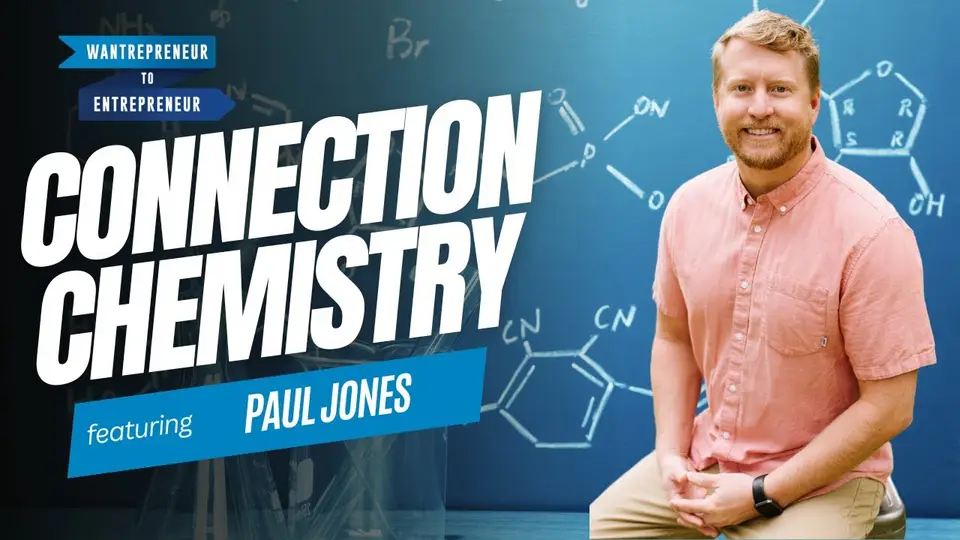
Paul Jones with Brian Lofrumento
Shared experiences give adults an easier route into genuine connection than unstructured networking.
Connection chemistry starts by identifying what a specific group has in common before designing the event.
A facilitator guides the conditions for trust instead of trying to manufacture a networking outcome.
Nearbound marketing turns those trusted relationships into a durable way to understand and reach a market.
Press a time to listen from there.
Paul cites studies linking a happy life to relationships, then traces his approach back to river guiding. Job titles fell away in his raft, and guides bonded over stories of things going wrong.
Paul recalls thousands of entrepreneurs at SaaStr hearing one speaker when they had more to learn from each other. Online events during COVID, he says, copied real life and let extroverts do the talking.
Paul says a community can exist without connection, so it needs a connection strategy. He traces how belonging moved from where people live to work and online spaces, and the polarization that can follow.
Brian points to Jeep owners and sneakerheads and asks how a business builds such a community. Paul compares webinars, where people watch alone, with what he calls webinots, where peers share what they are learning.
Paul says people are tired of outbound calls and suggests groups of three or four with one discussion prompt. In those groups, members getting good results in new ways can share what works.
Brian asks if community is an end in itself or a strategy. Paul says it is both, citing an HR community that changed a client's messaging, and calls nearbound the phase after outbound and inbound.
Brian turns to Bridgio. Paul describes its two sides at the time: building event-based communities for companies, and a video tool that sorts people into small groups so strangers meet online first.
Transcribed from the episode audio, with speaker names added. Sponsor messages are left out.
Brian Lofrumento
Hey, what is up? Welcome to this episode of the Wantrepreneur to Entrepreneur podcast. As always, I'm your host, Brian Lofrumento, and I'm so excited for all of us to hear from today's guest because he's described by a combination of two words that I've never seen go together, and those two words are a Connection Chemist. I love that, a Connection Chemist.
His name is Paul Jones. Paul is a visionary dedicated to forging deeper human connections through community building and innovative products. At the helm of his company, Bridgio, which is a bootstrap startup, he empowers businesses to go to market by cultivating vibrant communities. All of us want that surrounding our businesses, and Paul's going to illuminate so much of that for us here today.
Beyond his entrepreneurial endeavors, Paul has also pioneered distinctive communities such as the Fractional Executive Collective, and I love the name of this next one, Kick SaaS Founders. Like, SaaS as in software as a service company. Kick SaaS Founders, further solidifying his reputation as a leader in fostering authentic networks and relationships. This is going to be a fun one. You're in for a treat, so let's dive straight into my interview with Paul Jones.
All right, Paul, I'm so excited that you're here today. First things first, welcome to the show.
Paul Jones
Thanks, Brian. It's awesome to be here.
Brian Lofrumento
Heck yeah. So I tease listeners a little bit about this Connection Chemist, but take us beyond the bio. Who the heck is Paul? How did you start doing all these great things that you do today?
Paul Jones
Oh, wow. That is a loaded question. Appreciate that, though. I think the Connection Chemist side of it is, if we look at our world today, we can feel so connected. I mean, we have all these social programs, and a lot of people say it, and it's almost just overkill at this point, but where's the authentic connection?
And if you look at some of the studies that people have done, if you look at some of the longest relational studies that people have done, the best way to have a happy life is actually through your relationships. The best way to avoid mental health problems and disorders is to have healthy relationships. And so focusing it on the connection aspect has kind of been what, for me, has emerged throughout my life. And that's kind of the journey that I'm on, and it's likely going to change. The connection part of it's not going to change, but the way that I go about thinking about connection chemistry is probably going to change.
The chemistry side of that is what I've noticed, just as in my past as a river guide and being in the outdoor industry, is when you get people that climb mountains together, they are not going to skip a beat, and they're going to connect with each other. If you get people that play music or create music, you get them together, they are going to not skip a beat, and they're going to be able to connect over it. So all of a sudden, all of these preconceived notions, all of these things that stop us from connecting are eliminated, and people are able to have some really cool conversations.
So driving that home a little bit further, when I was a river guide, we're taking people down the river every single day, and we're taking... In my boat, I could have a doctor, a hedge fund manager, and the CEO of some big company. All of those titles go away, because the commonality that we share was this sense of adventure together.
And then that level goes up. If you're meeting with a bunch of river guides, the fun thing is, as you're sitting around the campfire, you're meeting with a bunch of river guides. The stories that we're swapping are the stories when we flip the raft. So these are failure stories. When we didn't quite tee up to the rapid, and this person back here fell out of the raft, and you had to throw a throw bag to him and pull him back into the raft.
And these are the stories that create connection, is these stories where things didn't actually quite go perfectly. So in a world where we're trying to present ourselves as perfect, the real connection side of it is when you feel like you can show up, and you can talk about your failure stories. I say failure stories because we get what that means. But what I mean by failure stories really is sometimes you win, sometimes you learn. So it's those learning stories that really help us connect with one another.
And so creating experiences that enable people to have those conversations, I think, is a massive opportunity in today's world. Let's turn off the filters. Let's sit down and have a real conversation that helps us connect. So that's the connection and then the chemistry side of it.
Brian Lofrumento
Yeah, I love that overview, Paul. It almost makes me want to ask the most simplistic question that I'm going to ask you today, which is hearing you talk about these things and understanding connection as adults. Like, of course, we all want connection. Every single human being is crying out for connection. So why the heck do we not do it?
Because when you list these examples, I mean, I know the people who I naturally connect to. If someone's from Boston, immediately we're connected. If someone's a Manchester United fan or a Boston Celtics fan, there's those immediate connections.
But it just feels like as adults, I mean, we don't walk around showing all of our passions and our commonalities on our bodies. Gosh, I wish that we did. It would make it a heck of a lot easier to meet people and to connect with people. But with those things in mind, what's so hard about connection for us?
Paul Jones
That is a great question. And that's actually a question... So when I left the outdoor industry, basically river guide throughout my college career, literally lived in a van down by the river. Super fun.
I left that. I started my own paddleboarding business, sold that. Then I got into corporate. And I remember going... I was part of a SaaS company. And we flew out to San Francisco and we were at SaaStr.
And what was really interesting to me is, in answer to your question, Brian, the short answer is I think we actually need guides. We need experiences that guide the connection. And so the example, the juxtaposition that I have is at SaaStr, I'm sitting in this room with thousands of other entrepreneurs. Thousands. And all of us are listening to one person speak.
And if you stop and think about that for a second, like, that's kind of weird. It's kind of strange that we all get together and then we all listen to one person speak. But the value in that room, if you look at the aggregated experience that, going back to learnings, the aggregated learning experience of everybody, all the entrepreneurs that were in that room right there, if you could somehow access that, you would learn way more than the keynote speaker speaking. Now, we need to have people inspiring us. But the challenge that I... The thing that I was, that I saw from that conference and pretty much every conference I've been to is the opportunity to connect with other attendees in such a way as learning is shared between one another.
And the thing that I think that's lacking, to your point, is that, you know, what's really interesting to me is when COVID happened, all of us were forced to go online. And I think the mistake that we made was we tried to mimic real life experiences in the digital environment. And what that ended up being was these unstructured, old school networking things where the extrovert is getting all the mileage out of the meetings and not everyone's able to talk and it's just kind of a mess. And so, coming from a guiding background and going to that SaaStr event, I was like, oh, we need guided experiences, guided connection experiences. We actually need to change the way connection occurs and do it in such a way that it does open up people to those conversations.
Brian Lofrumento
Yeah, I love that. Especially because knowing part of what you do business-wise, where my head goes is obviously we're talking about two different C words here today. We're talking about connections, but we're also talking about community. And I feel like that's a little unsettled in my mind right now because they're not the same thing.
They're related and it takes connection to have a community, but bridge that gap for us. What is that difference between connection and community? Because I think community is where the real power comes from. So, we're definitely going to go there in today's conversation. But first things first, I feel like we need to bridge that gap.
Paul Jones
Yeah, yeah, yeah. It's a good question. It's a really good question because I think that you can have community, but not have connection. I think that if you have community, you have to figure out ways to create those connection points or your community isn't going to be long-term viable.
So, what is this idea or definition of community? We can start with communities being where you live. So, that's literally probably the oldest term of a community. And now you hear words, you know, communities are influencers, audiences, or there are these Slack channels.
And so, this definition of community, the opportunity, I think, that exists inside of communities is that you're getting this filtered audience, this filtered group of people that share some commonality with each other. So, there's already an opportunity for connection. There's a natural movement toward having this baseline understanding of everyone that exists inside of these communities. Whether or not connection is activated in those communities is a separate thing. And that's where I think it truly does become a community is when connection exists.
So, every community out there, every community that you have, you have to identify what are those... And you can think of like a rope, right? A rope has many threads inside of it interwoven. And that's what makes it strong.
So, what are those commonalities that your audience or that your community shares with one another? And how do you bring that up and actually weave those together so that you get that connection strength inside that community? And that's that connection activation.
I think there's a lot of ways to do that. I mean, there's a lot of really great programs. There's a lot of great channels. There's community managers in general are doing some incredible things online, both in Slack channels, Discord channels, in synchronous meetings. There's a lot of really fun innovation that's happening there on that space.
But community as an idea really has come to the forefront in the last four years or so. And so, there's a lot of innovation happening inside of community itself. And I think we're going to see that shaping out.
The interesting trend that we're seeing is that this sense of community, which was the direct place where you lived, the neighborhood that you lived in, the city that you lived in... So, there's this really interesting and there's some great books about this. Bowling Alone is one of them. And there's a lot of research on how direct, geologically based, geographically based communities, people don't have that sense anymore. So, you might be too young to remember this, Brian, but there was a great show growing up called Cheers. And it was basically this local bar and the whole start of the show was you want to go to a place where people know your name.
And today, if you look at the trends, people aren't as engaged in their community anymore. People don't go and drink at the bar anymore. They drink at home. People don't go to community organized events as much as they used to. They're not as involved in their communities as they used to be. So, the question then becomes, where has community migrated?
And I think a lot of that sense of belonging that we look for and that we need as human beings is achieved at your work. It's achieved online, in online spaces. Because you can migrate to these high, you know, aggregated groups of people that you share interests with, which is great. But it also creates danger, too. And I think that's why, you know, we've become so polarized in a lot of ways, because I can join any community and I can get validated for what I believe.
The whole premise behind this sense of, you know, social network was you don't necessarily want to surround yourself with people that believe exactly the same thing that you believe, because then radicalization happens. So, you want to be able to get into conversations with people that believe things differently than you, but you still share that common thread of connection. So, you can see them as a human and you can have a conversation and consider that.
So, that was a long answer to your question, Brian. But I think that intentionally, if you have a community, if you have an audience, what's your connection strategy is a great question to ask. And an important question, because that is, if you've got a good connection strategy, that's only going to increase how long your community is going to be around and how much value your community members get from being involved.
Brian Lofrumento
Yeah, Paul, I'll tell you what, gosh, there's so many launch pads from what you just shared with us. The first one that I'm going to get out of the way quickly is, I thought you were similar in age to me. How the heck do you remember Cheers? I'm originally from Boston, so I've been to the Cheers bar, but yes, I have no idea what Cheers is.
Paul Jones
Nice, that's awesome.
Brian Lofrumento
Yeah, no idea what Cheers is.
Paul Jones
You'll have to look it up. It was a good show. I just remember it because my stepsister and brother were always watching it when I'd come home from school.
Brian Lofrumento
I love that. Well, that's awesome. But honestly, where it really took me and where my mind kept going as you were sharing this with us is I'm a business junkie. So I view most things through the world of business.
And as you're sharing it, I almost feel like this is the highest form of branding is community. I feel like that's what we should aspire towards because in the world of business and marketing, we always talk about, you know, you want to build brand awareness. But hearing you talk about this, I think about, and I'm biased, you're challenging the way we all view community today because I'm biased towards thinking of sports, for example.
Sports are a big part of my life. That's a built-in community that you have. Hobbies, for example. If someone plays tennis, immediately them and I are friends. There's no doubt about that.
But where my mind keeps going with regards to business is thinking about those brands. Like, I'm going to call out Jeep right now. I've never had a Jeep. I've had friends who have Jeeps. There's something about what Jeep is doing that they have a decentralized community. They have a community that doesn't live in a geographical place, doesn't live in a Slack channel, doesn't live online.
This is when Jeep owners drive past each other, they have the Jeep wave. They exchange rubber duckies when they see Jeeps parked in places. I still don't get that fad. But there's all sorts of elements to the Jeep community that when someone buys a Jeep, they're going to be a Jeep owner for life. And it's that community that really has established Jeep as the brand and the billion-dollar, you know, multi-billion-dollar company that it is today.
Which leads me to the biggest question, Paul. I'm just asking you a bunch of loaded questions here today. How the heck do we actually go about doing that? Because we're talking about a car company. There's not, you know, the Toyota community. Jeep did something different.
If we extrapolate that to, gosh, like Air Jordan. Okay, Air Jordan has a community. People who are sneakerheads identify as that label, and they are of the same ilk. How the heck do we create that in our businesses where we may not feel like it's a community-based business?
Paul Jones
Great question. I'm going to answer that impartial to what you outlined, which is business communities. And I think that you have to understand... So I'm going to use a term I created called webinots.
Okay, so we are coming from a place where everyone says content is king. And, you know, that is probably true. But the interesting thing about content is that content gathers people. But when people consume content, they consume it largely by themselves. But content really is there to start conversations. It's there to get you thinking.
So in your Jeep example, well, in your Jeep example, you can look at the type of content that they put out there. They're sharing their values. They're sharing what you can do with Jeeps. People are attracted to that. Now they're having conversations around all sorts of things. And all these rituals are coming out of this, right?
And so where we're coming from in the business world is, well, let's do a webinar. And if you think about a webinar, a webinar is a bunch of people still siloed, not connected, joining a digital video or whatever. And they might be able to connect via the chat, but they're there to consume content.
And what I think is emerging now with this community movement is this idea of webinots. So a webinot is the exact opposite of a webinar. It is not a webinar. It's the opportunity for people to come together and share learnings with each other. So masterminds, coaching groups, these types of things are trending quite a bit right now.
And I think it gathers around the opposite side of that spectrum, which is, okay, we have specialists. We have subject matter experts. We want to hear from them. But we also want to have conversations around this idea of the mutual engagement and uncertainty.
So this is social learning theory, but the idea is let's gather around in a circle and let's talk about the questions that don't necessarily have answers or the questions that have a lot of nuance to them. And let's share best practices around this. And so it's in that where I think business communities have a lot of opportunity.
In the past, a business would identify their ideal client persona or their ideal client profile. And they would identify what that ICP's pain points are. And then they would craft a message as to how their product solves that particular pain point. And so then you look at like an outbound motion.
An outbound motion is, hey, let's get on the call. We're going to call all these ideal client personas. And we're going to say, hey, do you have this pain? Hey, do you have this pain? Hey, do you have this pain?
So the approach is I've got this massive list. And I'm going to turn and burn through it so that I can find a very small percentage of people who at that moment, at that time, have that pain. And then I'm going to sell to them. And if you look at like 2015 and beyond, outbound conversion rates have decreased. People are kind of tired of that.
So this new approach, what community brings to the table for businesses, is you're already spending time identifying the pain points that your ideal persona has. And those pain points, some of them relate to your business product, and some of them don't. But you're already invested in that persona anyway. So why not create a space where social learning theory, where you can gather people together in small breakout rooms, you know, three to four people, and give them a discussion prompt to talk about?
So this is something we do in the Fractional Executive Brain Trust. We get together and we say, how are you doing prospecting? What does your 60 to 90 day plan look like?
And there's this concept, really great book called Influencer. There's this concept of positive deviance. So inside any community, inside any audience, there are people that are doing things in a deviant way and getting positive results. So deviant, in the past, it was like juveniles or deviants, they're doing things in a bad way, they're getting bad results. But there's the flip side of that, which is that people are doing new things, novel things by themselves, and they're getting great results. And those results, so they're doing things differently, deviant, and they're getting great results, positive.
So all of a sudden, you have all these like pockets of positive deviance inside this community. And when you bring them together to talk about certain topics, you allow those positive deviants to share those best practices. And those best practices can get shared out. People can leave with ideas. People are leaving with more connection. People are leaving with a bigger and better network.
So a lot of these things happen with business around just the topics that are related to the problems that their personas are having. Let's bring them together. And instead, you know, we might bring in a little subject matter expertise. But instead, let's just ask a really good question that takes us to the mutual engagement and uncertainty. And let's just explore that together.
And doing that enables best practices to be shared and all this kind of distribution of really good ideas. And people feel connected. They feel seen, heard, and respected. And they're able to share some of those experiences that they've had, both learnings and successes.
Brian Lofrumento
Yeah, Paul, I'll tell you what. One of our core mottos behind this show is that a rising tide lifts all boats. And what I'm hearing from you is that's a core part of building a successful community is let those rising tides show and let those rising tides also help to lift all those other boats. Feels great actually using this analogy with a former river guide. So I love that that also ties in there. But I think it's so important.
I mean, I think back to give listeners a really tangible example that I inadvertently, I didn't even realize I was doing this. This is just the pure extrovert in me. Really enjoyed it. We launched this show in 2016. Since then, millions of business podcasts have launched. Very few have made it to 800 plus episodes like we have.
And part of the reason why we caught on like wildfire back in 2016, 2017 was we were hosting Wantrepreneur to Entrepreneur office hours. It was not a webinar. We just invited entrepreneurs and wantrepreneurs to come hang out on Zoom. We had hundreds of people in these Zoom rooms just talking and splitting into breakout rooms.
And that became such a core part of, yes, a community. Even though we're just a podcast, so to speak, it's such a core part of our growth plan. And those people became advocates for the show and told it to their friends who told it to their friends. And the rest is history from there.
So, Paul, I really love the fact that you're illuminating this because we don't think of it as marketing. We don't think of it as brand building in the moment. But it really is a powerful tool for that. It almost makes me go all philosophical on you in that classic, I think it was Immanuel Kant who talked about doing things as the means to an end.
You already threw a little bit of shade on the typical funnels and people getting people into their conversion mechanisms. Talk to us about that. How much of this is intentionally saying, you know what, I'm going to build a community for the sake of community building versus I'm going to build this as a strategic part of my overall mix?
Paul Jones
You know, it's good. I don't think you can separate those two things because, you know, you take like a founder and let's take you, Brian, and your podcast, right? You, having done 800 episodes, you are very intimately aware of the problems that any entrepreneur is facing when they're first starting out and when they're first getting going. All the mountains that they're going to have to overcome and you're addressing those in your podcast.
Businesses create a solution for a specific problem, but the founder has to be intimately aware of and know about all of those problems. And so, I think it's hard to separate strategy from just let's do some good and build a community. And that's actually what I really, really love about it is you can still do some really good stuff and do it in a selfish way because you already have to know the problems that the persona has. And instead of just hitting to one point of their problem, create a community where all those problems can be discussed. You as the founder or you as the business are going to learn a ton about how that person, how those people talk about the problem, what the problems actually are.
I had a client we built an HR community for. We've been building it for three years. And what they realized after doing this for a while was that the way that they were talking about the problem isn't the way that their HR people were talking about the problem. And so, they were able to kind of shift and change their messaging. But if you're already going to be aware of all the problems that your persona is going to have, because, I mean, you're going to be doing interviews, your product people are going to be doing interviews, it makes sense to create a space where those conversations can just happen.
And so, you're right. I did throw shade a little bit on outbound just because it seems so basic. Like, let's just get a list and call through it and look for pain.
The community approach is, I want to stay in orbit. I want to be in the constellation of my customer. And I want to create space, a space where they can get value and where they can get answers to all of their problems, knowing that at some point, that customer is going to come into the pain that I solve. And so, at that point, I want to have enough trust and goodwill with that client or with that potential customer that they think about me or they think about us and our product.
And so, going back to your Jeep example, Jeep has this incredible community. People have these shared values. People are going on these adventures. People are swapping stories. People are customizing their Jeep. It's turned into something that's much, much bigger than I just need to get from point A to point B.
The question becomes, how am I getting from point A to point B? When am I getting to point A to point B? And people are having all these types of great conversations as a result of that.
So, in a business environment, you're already doing all of this work to uncover all of these challenges. But I think you can take it a step further and you can cultivate an environment where people are getting more than just your point solution value. They're able to learn from one another.
I do think that there's an exploration on this. You know, not every company is going to be able to build communities in the future. I think that the community or companies that are thinking about this now are the companies that are going to have successful communities in the future. I think in the future, it's going to be very hard for companies to build communities if they haven't already. So, it's not going to, you know, I think that it's going to be interesting to see how this plays out.
But I think this is the next phase of, you had outbound, you had inbound, and now you're starting to see these terms: nearbound. You're seeing these terms: instead of go-to-market, go-to-network. So, the network effects of us as human beings is starting to come into play. And I think it's the next higher energy iteration of serving customers.
Brian Lofrumento
Yeah, gosh, Paul, I'll tell you what. I'm going to confess here on the air. Listeners will know this because they tune in five days a week. That was one of the trickiest questions I've ever thrown out there. And kudos to you for answering it the way that you did. And especially, I love that you tied it in at the end with the word of energy.
I'm a big believer in the power of energy because when you talk about the fact that this is all tied in together when we're talking business, I think the biggest business lesson that I've learned here in my 30s is that everything we do business-wise has to be that exchange of energy. So, yeah, it's great to go into the marketplace and altruistically say we do these things for nothing other than altruism. But the reality is exchange of energy flows two ways. And so all of these things serve both the people who we want to be of service to, but they also serve us so that we can continue to get that energy in all the different ways that it's measured and keep continuing to serve others.
So I think that was a really powerful and insightful answer for you. And I think it speaks to the core of how you see community as such an essential ingredient to all of us in the way that we do business, the way that we connect with others, the way that we live our lives. So I really love the way you took that.
And on that note, I think it's a perfect transition to go into the world of Bridgio because you don't just come here and talk about these things. You are, I think, the way that you talk about these things, you are a pioneer in the way that you view these things and take action. So share with listeners, what the heck does Bridgio do? I'm so excited to hear your perspective on it as well, having done my own research on your business.
Paul Jones
Thanks. Appreciate that. And I appreciate your perspective on that too. It's cool to hear your kind of journey and what you've been doing with the podcast and things like that.
So with Bridgio, the idea is you have to remember, okay, coming from this river guide background, looking into digital experiences, realizing that we actually need digital connection experiences that are different from in real life. And so the idea or the concept behind Bridgio is that if you have a community that needs to be connected, let's deploy learning circles. So I was talking about this earlier, which is social learning theory, the mutual engagement and uncertainty. Let's gather together small groups and let's give them discussion prompts to talk about so that best practice sharing can occur.
Let's create these little learning circles where people can swap stories and where people can connect with one another on, you know, you said it earlier, like tennis or Jeep or whatever. Let's find these threads that unite us across identities and enable us to have conversations. And that's the idea behind what we're trying to build at Bridgio.
And so right now, what we do is we're a bootstrap startup. So we have a services side and then we have a software side. And the services side of what we do is we build communities for companies. I go to, you know, a company comes to us and says, our ideal client persona is X. What we do is we go out on their behalf.
So we're kind of a fractional community team, if you will. We go out and we build a community, an event-based community on their behalf for them. And we get the... Usually we'll get the founder involved or someone, you know, higher up in the company, someone that needs to be close to the customer. So we do that on a retainer type basis. So that's the services side of what Bridgio does.
And then we've also been building this digital product that is... Zoom is... In comparison to Zoom, Zoom is a great tool. You land in there, you can get work done, you can hit the ground running. But everyone that goes on Zoom or any... Pretty much at this point, any platform out there will land in a video, digital video room with no context.
So what Bridgio does is Bridgio... You can think of Bridgio as like the Sorting Hat of Harry Potter. You go through a series of questions and there's hundreds of different types of templated questions that we can create. So we call these connection experiences.
So what you do is you craft a connection experience. In that connection experience, you choose, you know, questions that you want to ask the participants. They go through those questions. Based off how they answer those questions, we have an algorithm and we also utilize OpenAI to help us sort people into small groups of three to four people. Once they land in their video breakout room, we give them discussion prompts to discuss and they're able to connect in there and so on and so forth.
And so now you've kind of got this... You land in your breakout room and you know the commonality that you share with everybody else. And then we give you these discussion prompts where you can kind of connect with other people. So the idea behind it is we want to create the digital handshake. Bridgio is the digital handshake that makes hugging in real life possible.
And so it's not designed to replace in real life. In real life is always going to be awesome and it's always going to be better. But what in real life shouldn't be is it shouldn't be strangers meeting strangers. That should be happening digitally. When you meet with someone in real life, you want to take that relationship a little bit deeper. You want to have a shared experience with them.
Early on when I was starting Bridgio, I had a conversation with the executive director of Las Vegas. This was right at the beginning of COVID. And Vegas, of course, was a ghost town. But the future of Vegas is events and it is these experiences. And so I asked him, obviously, are you guys worried about this? How long this could go?
He's like, we're not worried about this at all. I said, well, what's the future of events? He said, the future of events are smaller, more curated experiences. People are going to want to gather with people that they already know and have shared experiences with each other. And I think that's where in real life is where you get the most out of in real life.
There's a lot of research that shows that if a bunch of strangers get together at a conference, nine out of ten of the relationships you make at a conference will be gone in a year. So digital is the perfect place where you can start to form those small connections. And then when you go to the in-person conference, you already have your community. You already have your people that you can build those deeper relationships with. So that's the whole idea behind that software.
Brian Lofrumento
Yeah, gosh, Paul, hearing you talk about it firsthand, it's so clear how passionate you are about the power of connection and community. I think you've earned your moniker here today of a Connection Chemist. So all of your brilliance has been on display.
I think that's such a perfect segue for you to drop those links on us. I know that I'm super keen to follow your developments and even more than just your business's growth, the clients that you serve. Because I think that you're really going to raise that bar when it comes to branding, when it comes to marketing, when it comes to that connection and the communities that are going to live inside of the world of business. Which all of this is to say that you're making business better, which makes life better, which makes society better.
You talked about the divisiveness in society. So I think the work that you're doing is so incredibly important. So for listeners who want to go deeper into your work, drop those links on us. Where should they go from here?
Paul Jones
Thanks. Well, we can connect on LinkedIn, of course. You can also follow... I have a podcast that you can follow as well. But LinkedIn will be a great place to connect.
Brian Lofrumento
Yes, listeners, you already know the drill. We are making it as easy as possible for you to go deep down the amazing rabbit hole of all the great work that Paul is doing. And you can get a heck of a lot more of him on his own podcast. So don't be shy. Check out the show notes down below for a link to Bridgio's website, a link to Paul's website, as well as a link to Paul's personal LinkedIn. And Paul, on behalf of myself and all the listeners around the world, thanks so much for sharing so generously with us here today on the podcast.
Paul Jones
Thanks, Brian, and congratulations on an awesome show and all the work you've been doing.
Brian Lofrumento
Thank you.
Hey, it's Brian here, and thanks for tuning in to yet another episode of the Wantrepreneur to Entrepreneur podcast. If you haven't checked us out online, there's so much good stuff there. Check out the show's website and all the show notes that we talked about in today's episode at thewantrepreneurshow.com.
And I just want to give a shout out to our amazing guests. There's a reason why we are ad-free and have produced so many incredible episodes five days a week for you. And it's because our guests step up to the plate. These are not sponsored episodes. These are not infomercials.
Our guests help us cover the costs of our productions. They so deeply believe in the power of getting their message out in front of you, awesome wantrepreneurs and entrepreneurs, that they contribute to help us make these productions possible. So thank you to not only today's guests, but all of our guests in general.
And I just want to invite you. Check out our website because you can send us a voicemail there. We also have live chat.
If you want to interact directly with me, go to thewantrepreneurshow.com. Initiate a live chat. It's for real me. And I'm excited because I'll see you, as always, every Monday, Wednesday, Friday, Saturday, and Sunday here on the Wantrepreneur to Entrepreneur podcast.
Listen · 32 min No Trade Secrets, Ep 10, Part 2
How to build a community people want to join without turning it into a sales pitch.
With Jarome McKenzie
 Listen · 35 min
The Slow Pitch Sales Podcast, Ep 115
How to move from a trusted relationship to a useful sales conversation without forcing the transition.
With Rob Jager
 Watch · 42 min
Community ROI
Why community can be the way you go to market instead of an extra programme.
With Yurii Lazaruk
A free 20-minute call.

You'll talk with Paul Jones, Bridgio's founder.